Most architectural photography happens after the dust settles, but some of the most useful images happen long before.
Nashville is a city in the middle of becoming something. Drive through the Gulch, Wedgewood-Houston, or out toward the Hermitage and you pass as many cranes as finished facades. For an architectural photographer, that in-between state is usually treated as a problem to wait out. I think it's an opportunity most builders and design firms leave on the table.
I photograph architecture across the Southeast from a base in Birmingham, and Nashville has become a regular part of that travel. A growing share of the work I'm asked about is residential and commercial, and almost all of it shares the same arc. A site is cleared, a structure goes up over months, and then everyone scrambles to get one good set of photos at the end. The finished building deserves that final shoot. But the months in between tell a story the final images can't.
A completed building hides its own making. Once the drywall is up and the site is landscaped, the structure, the sequencing, and the craft are invisible. During construction, all of it is on display: the framing, the steel, the way a foundation negotiates a difficult site.
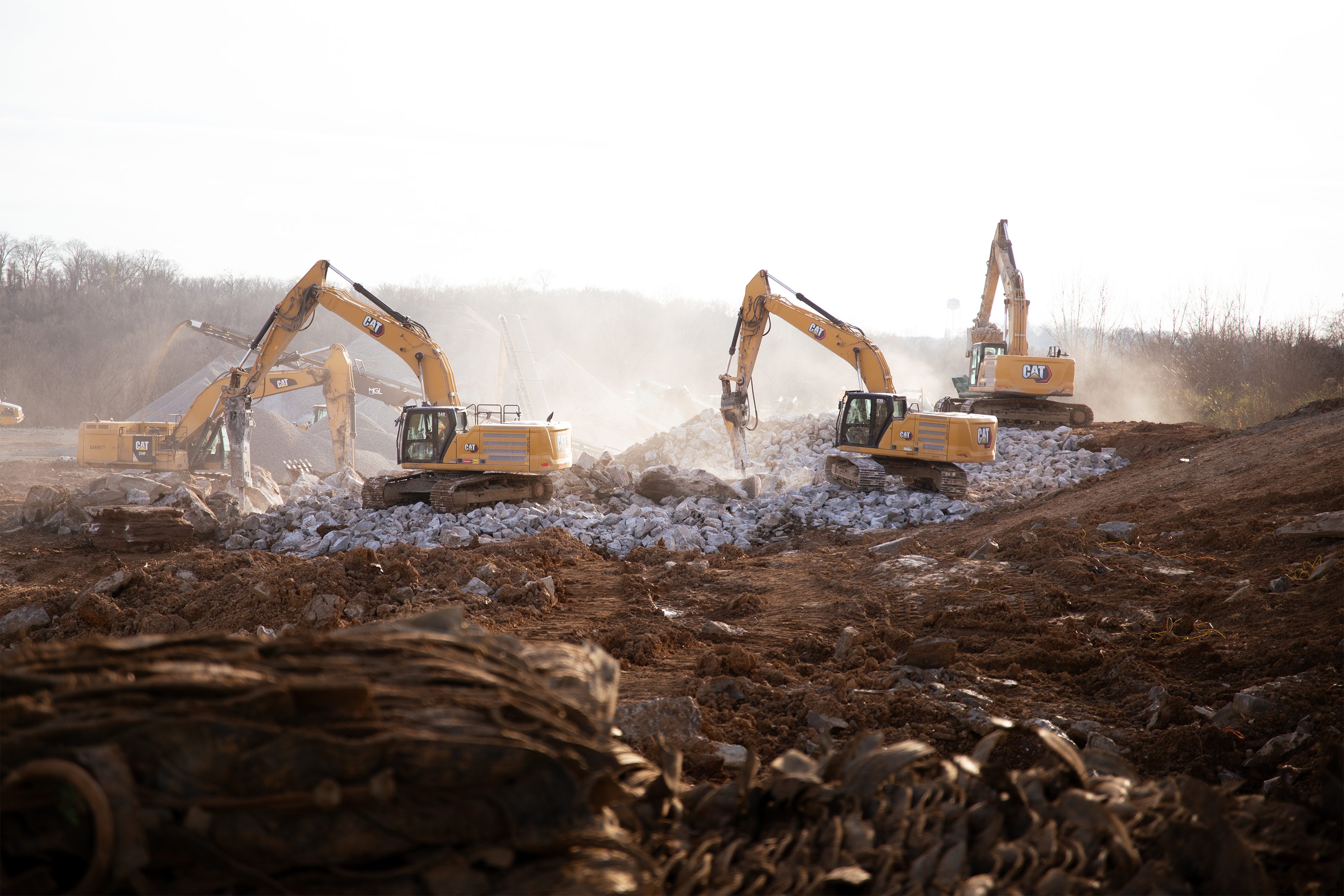
Project Hermitage in Nashville is a good example of the phase I mean. When I documented it, early site work was the story. Rock blasting and groundwork, the unglamorous but defining first move of a project on a hard site. Built with Cooper Construction, the work at that stage is pure problem-solving, and it photographs with a kind of honesty the finished home never will. A buyer sees a house. A builder, an engineer, or a future client sees how the ground was won.
For a builder or a general contractor, in-progress images are not vanity shots. They are documentation. They show how a complicated detail was executed, they create a record for the owner, and they become marketing material that proves capability rather than just showing a pretty result. A firm that can show how it solved a site is more convincing than one that only shows the after.
There's a practical dimension too. Construction photography on a schedule, a visit every few weeks planned around the phases that matter, builds a sequence. That sequence is its own deliverable: a time-lapse of decisions, useful for award submissions, for the project page, and for the next pitch.
A live construction site is not a finished interior, and I don't photograph it like one. The work is calmer and more deliberate than it looks. I plan visits around the milestones worth recording (site prep, structure, dry-in, finishes) rather than showing up at random. I work around the crew, not against them, and I shoot with the same natural-light approach I bring to a finished building: honest images, no theatrics.
The goal is the same as it always is. Make images that read clearly in a portfolio, a publication, or a sales process. The only difference on a working site is that the architecture is still telling you how it was made.
Nashville's pace means there is always a building going up somewhere worth recording. If you're a builder, a developer, or a design firm with a project underway here, the in-progress phase is worth photographing on purpose, not as an afterthought. The final shoot will always have its place, but the months before it are where some of the real work shows.
I would love to work with you, reach out on the contact page.
If you are finishing a new build, opening a venue, or documenting a space that matters to the city, timing and approach make a difference. I work with architects, builders, and developers who want their projects photographed clearly and honestly.